

Sachs: Grabbing Clutch
General note
Our useful tips provide only an overview. The installation instructions and operating instructions provided by the vehicle manufacturer and the warning and safety instructions contained therein must be observed! All work must be performed by a trained professional. The pictures used and the procedure described in our tips are examples and may vary depending on the vehicle manufacturer and axle design.
Clutch grabbing – what is it?
When alternating torques occur in the slip phase (e.g., due to friction value fluctuations) and causes vibration of the driveline, this is called clutch grab. Instead of slipping evenly, the clutch grips suddenly, then loses contact. The driver experiences these oscillations as vibrations, rolling or bucking. A grabbing or juddering clutch produces a severe vibration motion and can have various causes.
Why does a clutch grab?
In order to know how to stop the clutch grabbing, it is necessary to find out what causes the juddering problem. Apart from the clutch itself, poor engine setting or worn engine or transmission mounts can prevent smooth clutch engagement. Other possible causes for grabbing clutches are installation of the wrong clutch disk or incorrect installation.
Check:
- Correct parts for the vehicle?
- Associated system components / check all parts for wear and correct settings
- Clutch release system?
- Driveline bearing?
- Engine management?
- Deficiencies in the driveline?
Facings slightly contaminated with oil or grease
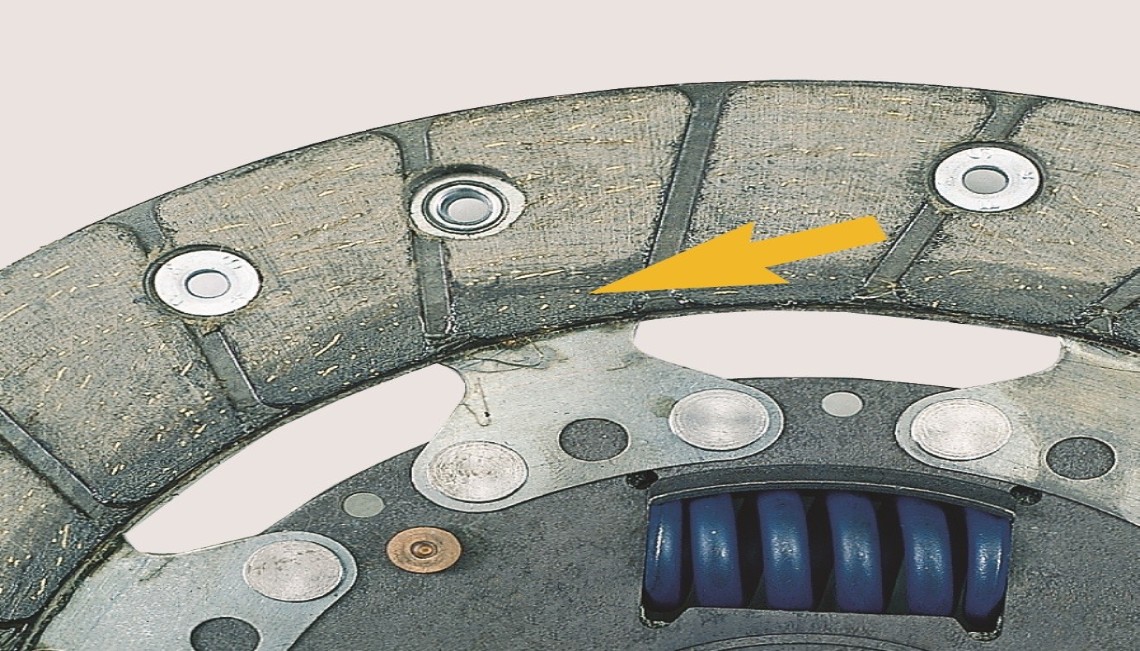
Facings slightly contaminated with oil or grease
Cause:
- Damaged transmission or engine sealing
- Excessive grease on the transmission input shaft or pilot bearing
- Leakage in hydraulic actuation system
- Contamination of the friction surfaces due to incorrect handling
Consequence:
Even minor traces of oil or grease have a significant adverse effect on friction values, and thus start-up performance when the clutch is engaged.
Hub spline damaged
Cause:
- Transmission shaft and clutch hub forced together during installation
- Excessive angular movement during transmission installation
Consequence:
Clutch disk does not move or moves jerkily on the transmission input shaft.
Comment:
Also often causes drag.
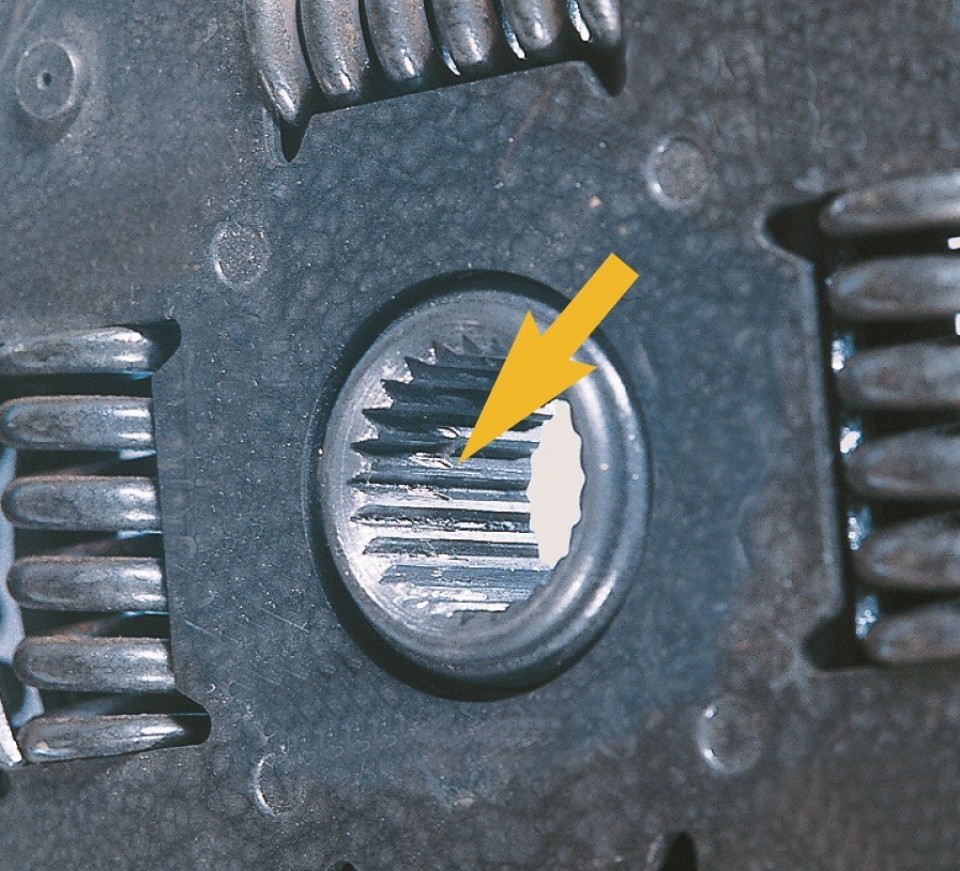
Hub spline damaged
Housing deformed
Cause:
- Attachment screws not professionally tightened during installation. Not tightened in a cross-wise, over-center sequence.
- Clutch pressure plate not correctly centered in the flywheel.
Consequence:
Lop-sided pressure plate lift
Comment:
Drag may occur if the problem is severe.
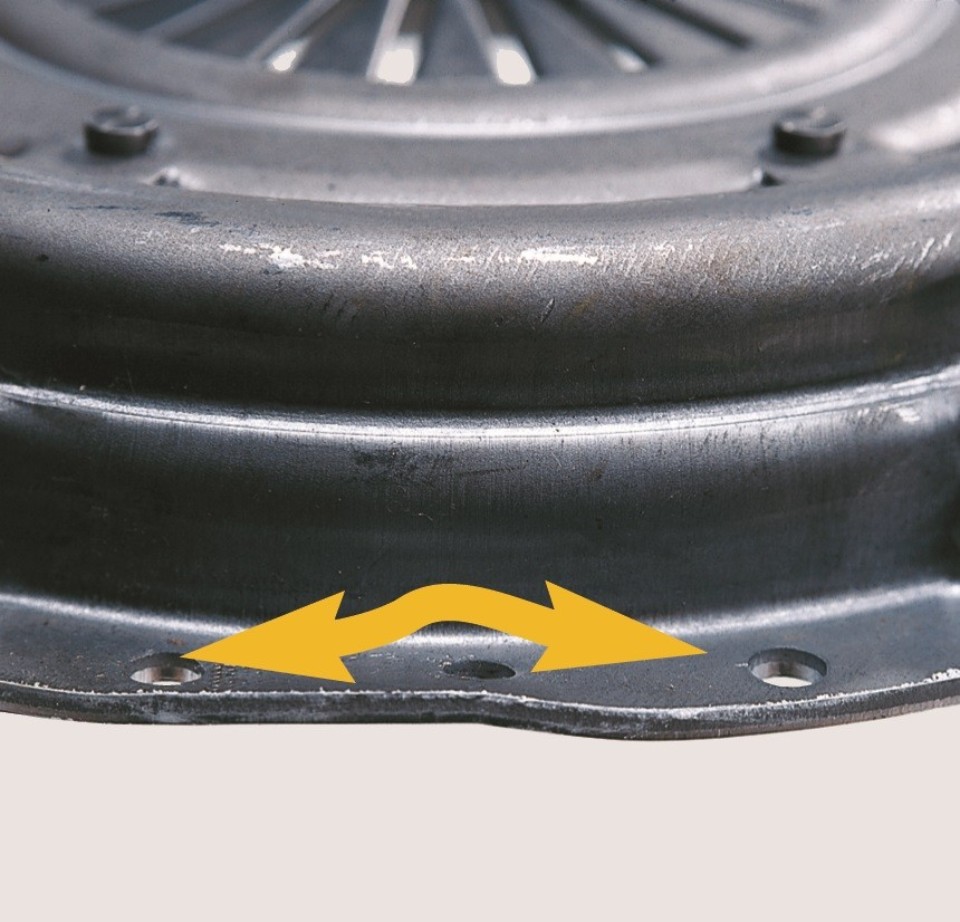
Housing deformed
Tangential leaf springs deformed
Cause:
- Incorrect counter-holding technique, e.g., with a screwdriver, when bolting down clutch pressure plate (MX pressure plate)
- Damage during transport, storage or handling
Consequence:
Lop-sided pressure plate lift
Comment:
May also cause drag.
Important:
Secure the flywheel against turning with a suitable tool provided by the vehicle manufacturer for this purpose.
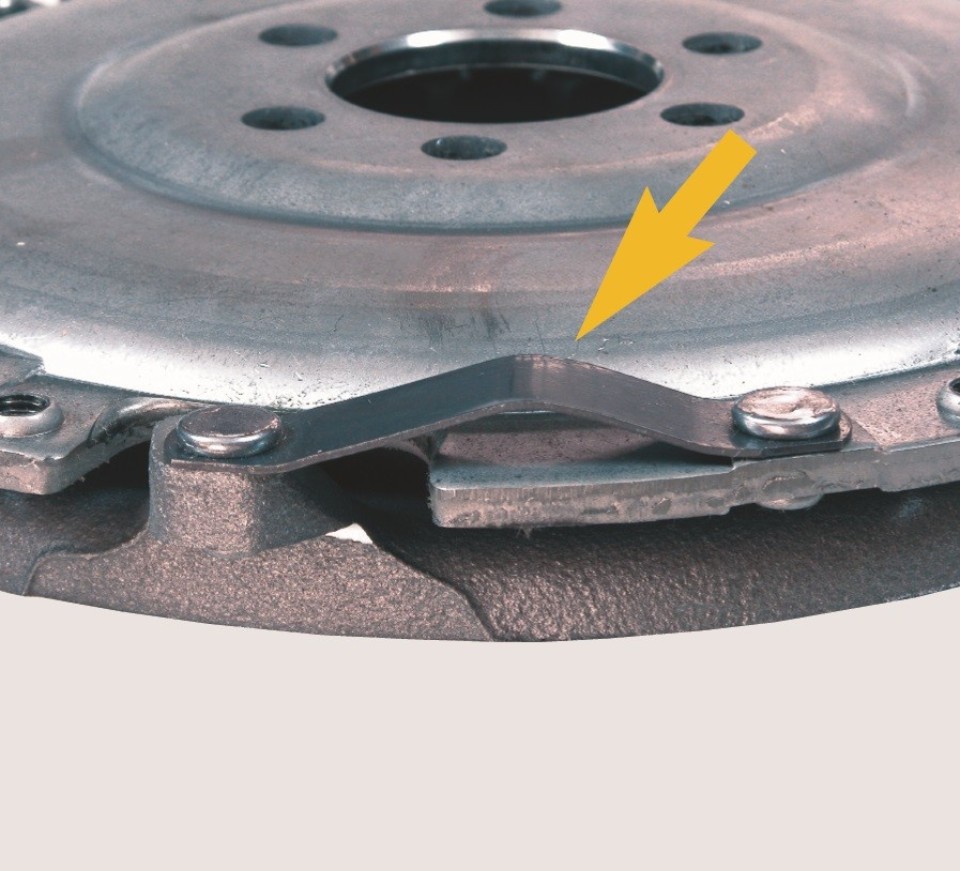
Tangential leaf springs deformed
Worn engine / transmission mounts
Cause:
Worn parts
Consequence:
Leads to pseudo grab (bonanza effect) in driveline during setting off and gear changing or load changing.
Comment:
Always check these components for signs of wear (e.g., cracks in the rubber-metal joints or damaged joints).
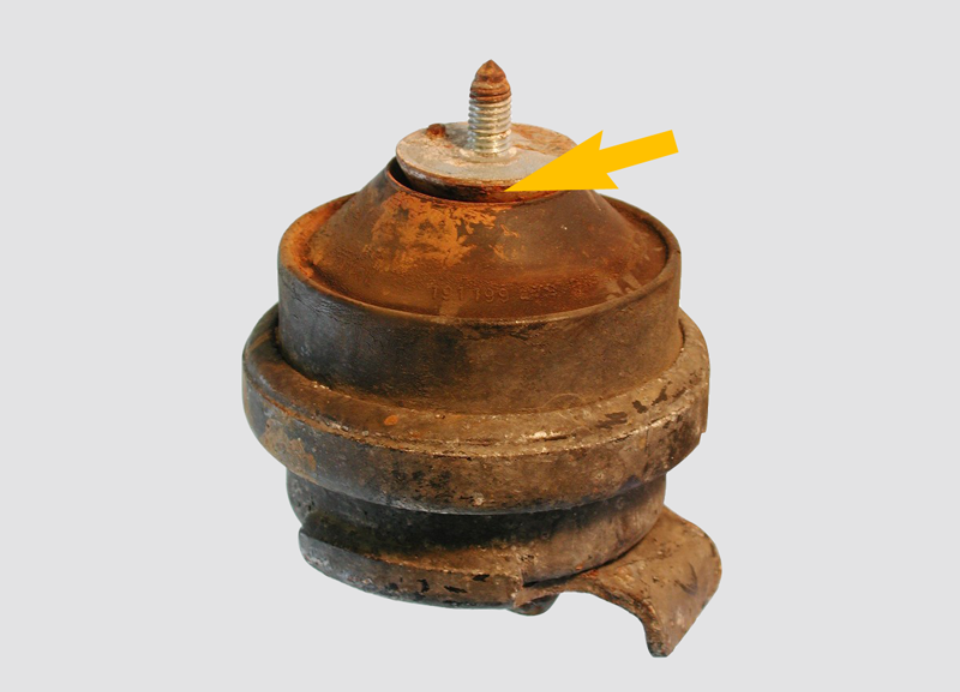
Worn engine mount