
Diesel Particulate Filters explained
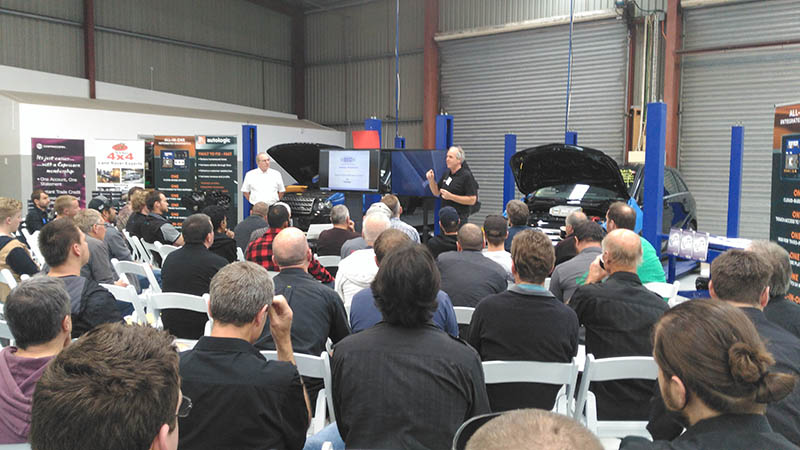
Stuart Still, Technical Trainer, with European Exhaust and Catalyst (EEC) answers a few of the frequently asked questions associated with Diesel Particulate Filters (DPFs).

Over the past few months on my visits to various garages, free fits, accessory shops, motor factors, and distributors, I have been asking a couple of questions regarding DPFs.
How many do you sell or fit? and do you actively promote them?
The majority of the answers were, “We regard it as a main dealer only product, we don’t want to get involved with DPFs as they are too complicated.”
I was staggered!
I explained that a DPF is only a filter which removes soot / carbon from the exhaust gases, and is very easy to fit.
The main dealers account for the majority of the DPFs fitted within our market place.
A DPF is a serviceable item so if they over fill within the manufacturer’s warranty period it is not classed as a warranty. They are regarded in the same way as an oil, fuel, or air filter.
The warranty only covers for mechanical failure.
The aftermarket is missing out on an opportunity to increase their sales and profit margin! DPFs are a high ticket product!
I thought it may be useful to offer some information thus allowing you to feel more confident when discussing DPFs.
There seems to be some confusion on why they fail and how to diagnose faults.
It is extremely unusual for a DPF to fail on its own!
The problems are usually upstream of the DPF.
 The majority of vehicle manufacturers have the same warning light sequence as shown. Always check the vehicle’s own handbook to be safe.
If the DPF light comes on you need to activate the regeneration process.
Once again, read the hand book for instructions.
For example, ‘Drive for 20 minutes at more than 2500RPM’.
If DPF is not regenerated at this stage and fills to over 90 per cent or 45 grams, the DPF will need replacing. This is not covered under warranty.
If the coil and engine management lights are illuminated with loss of power, limp home mode will engage.
The fault code will read ‘DPF soot loading too high’.
Forced / emergency regenerate is required.
In order to carry out a forced DPF regeneration you will need to use a diagnostic machine with this function on it.
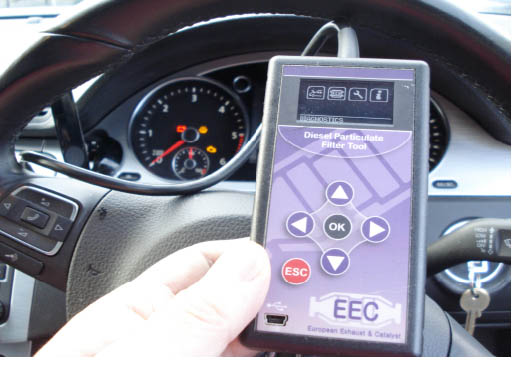
If the engine management light comes on first, followed by the DPF light, it indicates an issue within the DPF system, for example temperature, pressure, sensors etc.
Ensure the vehicle is in park/neutral, with the hand brake on, engine warm, with at least a quarter tank of fuel, and that there are no fault codes stored (step by step guide supplied with the reset /regenerate tool).
Useful Advice if DPF has overfilled:
Check pressure and temperature sensors.
Examine pressure pipes for damage or condensation, they must be clean and dry.
Check that the EGR system is working correctly.
Check that the vehicle has the correct spec engine oil.
Check the additive level, when applicable (active system) Eolys / Cerine.
Check injectors/glow plugs.
Check oil levels, as levels can rise as a result of the regeneration process due to fuel getting into the engine oil.
If there is oil contamination you must change the oil and filter when replacing a DPF.
Peugeot explain that it may be necessary to change the engine oil every 10,000 miles.
The ECU must be readapted when a new DPF is fitted and also when the fuel additive Eolys/Cerine is topped up.
Check the exhaust system for corrosion, air leaks, etc.
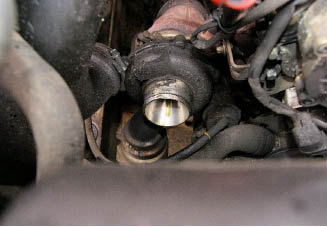 Check the turbo is working correctly.
When the filter load reaches a pre-determined level (40% to 50%) the ECU will activate the regen process, by injecting up to 8 times the amount of fuel per stroke to increasing the temperature within the DPF to over 550 degrees, so burning off all of the particulate matter with in the DPF.
DPF will not regenerate:
If an engine management light is on.
If the EGR valve is faulty/blocked.
If there is less than 20 litres of fuel in the fuel tank or if the fuel light is on regeneration will not take place.
If you drive with your foot on the clutch pedal.
Please Note:
You must re-adapt the ECU when fitting a new DPF/
Data and procedures may vary between manufacturers
EEC has an extensive range of DPFs which is increasing day by day.
EEC is committed to an education and training programme within the industry to help technicians understand, evaluate and diagnose emission problems.
The introduction of type approval for catalytic converters has been a great leap forward and has created a more level playing field.
EEC has invested heavily in its own wash coating facility in Denmead, to ensure it produces a top quality product for home and export markets.
For information regarding emissions, DPFs, 4 gas analyses, and technical training, please contact Duncan Richards or Stuart Still at EEC. Eurocats.co.uk. Email: sales@eurocats.co.uk